- Certifier :
- Global Trust Certification Ltd.
- Certified status :
- Certified
- Certified since :
- 16 Jul 2013
- Certificate expires :
- 15 Aug 2029
Overview
Fisheries are composed of one or more parts, each of which is entitled to receive an MSC certificate. These parts or “units” are defined by their target stock(s), fishing gear type(s) and if relevant vessel type(s), and the fishing fleets or groups of vessels.
When the term “Unit of Certification” is used for fishing units that are in assessment, it refers to the “Unit of Assessment” or “Unit of potential certification”. Expand a status below to view the parts that form this fishery. To check the detailed scope, download the latest certificate or open the Assessments page to get the latest report. Find out more by visiting our page on Fisheries
Catch by Species
| Species | Reported Catch Year | Metric Tonnes |
|---|---|---|
| American lobster (Homarus americanus) | 2024 | 7,348.4 |
Information is provided by an independent Conformity Assessment Body as live weight (the weight of species at the time of catch, before processing) and where a fishing season covers multiple years, the end year is given as the reported catch year. Additional information is available in the latest report, see the assessments page.
Eligibility, client groups and vessel lists
A fishery may choose to define the members of the fishery certificate. These members can be vessels or other client group members (e.g. companies that own vessels and/or companies that are named as eligible to handle certified product covered within the fishery certificate scope). Please refer to the fishery certificate statement on additional product specific eligibility criteria (e.g. product eligibility limitations, eligibility date, exclusive points of landing and the point where Chain of Custody certificate is required). Please consult the fishery Public Certification Report for product eligibility rationale.
| Documents | Published on | Files |
|---|---|---|
| Vessel List | 17 Nov 2025 | 1 files |
About this Fishery
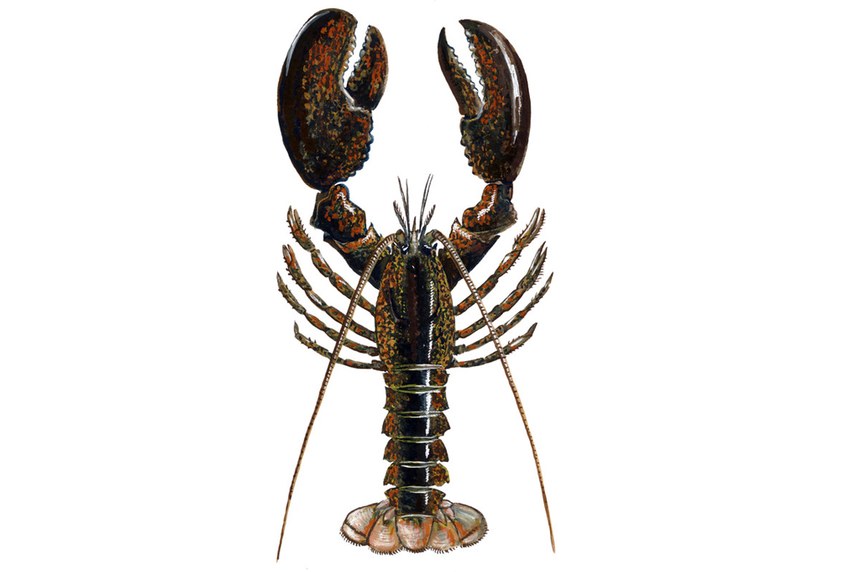
Atlantic Lobster (Homarus americanus) image © Scandinavian Fishing Year Book
The American lobster is distributed from Cape Hatteras in North Carolina to Newfoundland to the Strait of Belle Isle that separates Labrador and Newfoundland. It inhabits areas from the water line out to the edge of the continental shelf.
The American lobster is among the largest of all marine crustaceans, sometimes growing to lengths of 60cm and weighing over 18kg. It is also considered the longest-living crustacean, capable of reaching ages up to 50 years.
Lobster fishing is an important industry for the 11,000 inhabitants of the Magdalen Islands in the Gulf of St. Lawrence, off the east coast of Canada. There are 325 registered vessels harvesting lobster in the fishery. In total, the primary and secondary lobster processing sectors provide employment to around 10% of the islands’ population.
Lobster are caught in baited traps. These are set by lines (strings) with a minimum of 7 traps per line, a maximum 8 fathoms (14m) between each trap and 56 fathoms (102m) from the first to the last trap. The lines must carry buoys marked with the fishing vessel registration number. The lobster fishing season in the area is restricted to the months of May and June.
Market Information
The main commercial market for Magdalen Islands lobster is Quebec with the majority sold fresh.